Ss Singh Practices the Lost Art of Predicting the Future
(RNS) — The by 10 years have witnessed awe-inspiring demographic shifts in the U.Due south., catastrophic natural disasters and new urgency on climate change, a reckoning on sexual activity abuse among religious groups from the Cosmic Church to the Shambhala Buddhist community.
This decade has seen the reelection of the land's offset black president and the election of the start president to call for an outright ban on Muslims entering the country. It has been marked by world-shaking movements such every bit the Arab Spring, Occupy Wall Street, Black Lives Thing and #MeToo; migrant crises at the United States' Southern border as well as in Africa and Asia; the ascent of bots and social media disinformation campaigns; the legalization of same-sex marriage, matched by a revolution in the way Americans retrieve about gender and sexuality; the decease of Osama bin Laden and the rising and fall of the Islamic Country grouping; terrorist attacks, schoolhouse shootings and violent attacks upon houses of worship; movement on the legalization of marijuana; the beginning of the Syrian civil war; controversial hearings on American Muslim radicalization and the launch of federal Countering Violent Extremism programs; and new attending to mental wellness, among countless other trends, movements and headlines.
What will the next decade agree?
We asked scholars, faith leaders, activists and other experts to reflect on some of the biggest shifts in religious landscapes they have seen over the last 10 years — equally well as the biggest themes in the world of religion that they look to emerge in the 2020s.
The views expressed in these submissions, which have been edited lightly for length and clarity, exercise not necessarily reverberate those of Faith News Service. Find 2018'south predictions here and 2019's predictions hither.
Khyati Joshi: A reckoning for religious minorities in the United states of america and Bharat
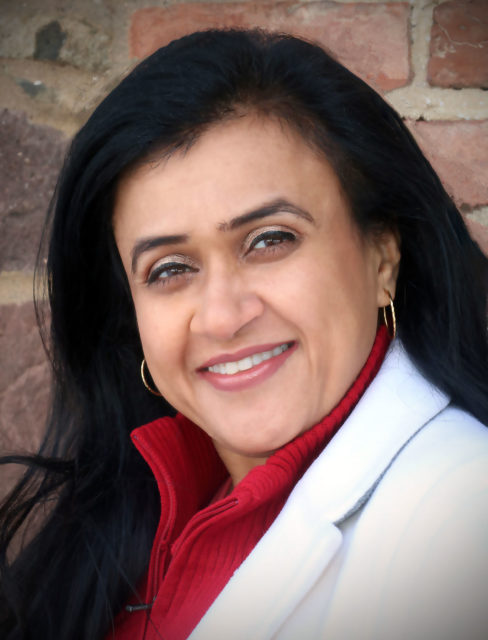 The past decade has seen America'due south immigrant religious minority communities emerge with constructive and forceful self-advocacy. Hindu temples, mosques and other houses of worship are suing for the right to build, rather than avoiding disharmonize and settling for inferior locations equally many previously did. Sikh Americans have fought for the opportunity to serve in the military, police and Secret Service while observing their faith's tenets. These groups are staking their claim to physical and rhetorical space in the public square.
Simultaneously, segments of white Christian America fear that the nation is losing its identity. This fearfulness has resulted in song and tearing religious discrimination, the Muslim ban, state-mandated educational activity of the Bible in public schools and laws barring teachers from penalizing students who give faith-based answers in science class.
I'm keeping an eye on these growing bonds of nationalism and religion in America, likewise every bit in India. In both large, officially secular democracies, a ascension tide of thought and official action links national identity with the bulk faith. Notions of "existent" Americanness weave together whiteness and Christianity, while Indian national identity and policy abound increasingly Hindu. India has seen Hindu communities policing minorities' diets; the Supreme Court resolution in favor of Hindus in the Ayodhya territorial dispute between a mosque and a Hindu temple; and the Citizenship Subpoena Act, which singles out Muslims for less favorable handling every bit immigrants and refugees.
Both nations approach a crunch point. In India, ascent protests and the government's violent response volition spark a reckoning near how the nation treats its minorities. And side by side year, Americans will either reelect a president who plays to the shrinking white Christian majority's basest xenophobic instincts, or a various coalition volition elect a candidate whose vision of a "more perfect marriage" embraces religious difference.
Joshi is a professor at Fairleigh Dickinson University and author of "New Roots in America's Sacred Basis: Faith, Race and Ethnicity in Indian America." Her new book, "White Christian Privilege," will exist published in 2020.
Luke Goodrich: SCOTUS will rule during an era of unprecedented religious freedom conflicts
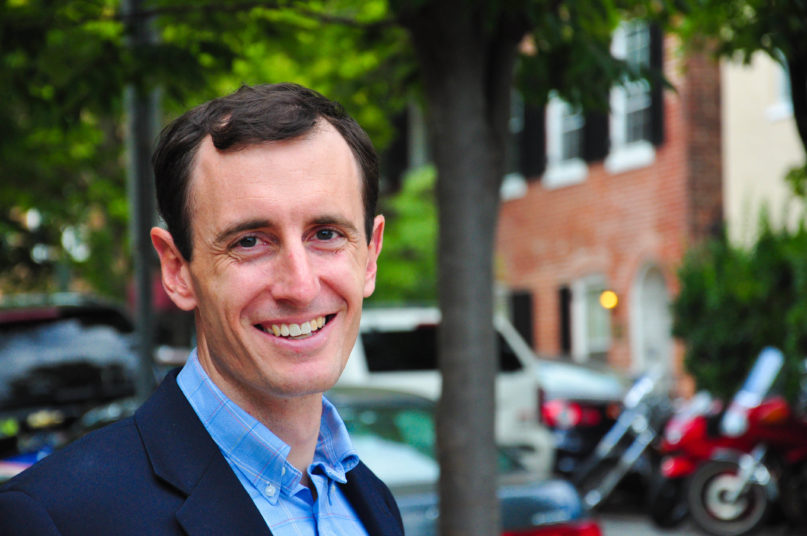
Courtesy of Becket Fund for Religious Liberty
One major shift in the past decade is that traditional Christian beliefs about abortion and marriage are increasingly viewed by some parts of guild as a threat to modern civilization. The event has been pregnant, unprecedented religious freedom conflicts involving traditional Christian views. Examples include the over 100 federal lawsuits filed over the contraception mandate, culminating in the Hobby Antechamber and Little Sisters of the Poor decisions by the Supreme Court; and the increasingly common litigation over conscientious objections to aforementioned-sex wedlock by religious wedding vendors, schools, counselors and adoption agencies.
In the adjacent decade, expect the Supreme Court to issue multiple, significant decisions on religious freedom. In the context of ballgame, expect the court to affirm the long-settled principle that no person tin can be forced to participate in an abortion in violation of his or her religious behavior. And in the context of aforementioned-sex marriage, look the courtroom to brand good on its hope in Obergefell, its landmark conclusion affirming same-sex marriage, that "religions, and those who adhere to religious doctrines, may proceed to advocate with utmost, sincere conviction that, by divine precepts, same-sex activity spousal relationship should not be condoned." In other words, the court will recognize that our country is deeply divided on matters of religion and sexuality. And information technology volition agree that the government doesn't get to pick one side of that divide and punish anybody who disagrees, but must instead protect the equality and dignity of both sides of the debate.
Goodrich is an attorney at the Becket Fund for Religious Liberty. His book, "Free to Believe: The Battle Over Religious Liberty in America," was published in October.
Wardah Khalid: Muslim political engagement will reach new heights
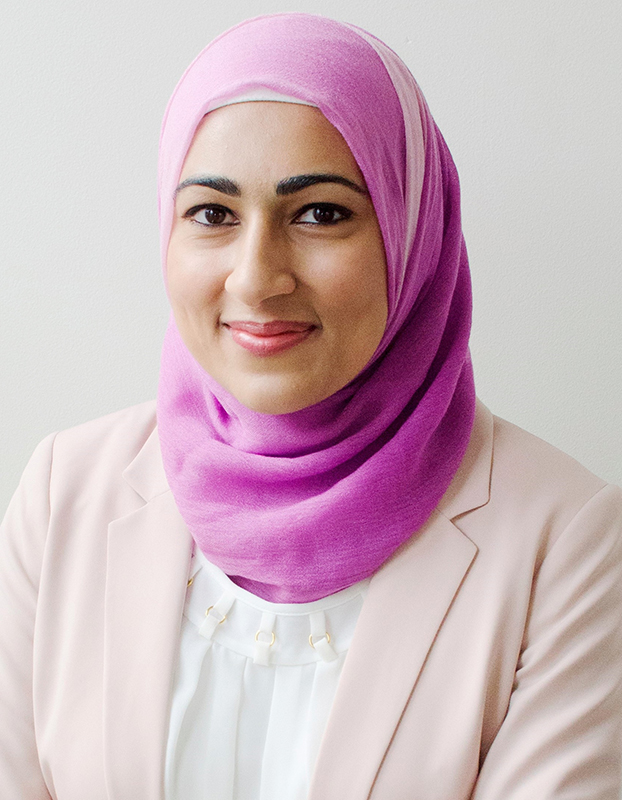
Courtesy of Christine Letts, FCNL
Ten years agone, I started a web log called "Young American Muslim" in response to the Islamophobia I witnessed around President Barack Obama's election and began speaking near the unsafe consequences of the Islamophobia network. At the time, Muslims were constantly being put on the defensive. Equally Americans asked "Where are the moderate Muslims? Why don't Muslims condemn terror?," many of us felt education could help solve the problem.
Today, equally hate crimes against the customs have reached their highest levels since 9/11, exacerbated by bigoted rhetoric in the media and the nation'south highest political offices, Muslims take moved beyond that. They are now joining the media and policymaking process themselves to define their own narrative.
America'southward estimated 3.8 1000000 to 8 million Muslims will go on to build political ability, motivated by Islamic values such as peace and justice. We volition run into voter registration and engagement with elected officials rise aslope more Muslims running for office, working on Capitol Colina and organizing at the grassroots level around domestic and international problems. At the national level, we'll encounter deliverables such as presidential policy platforms (for the starting time time?) and improved coordination betwixt Muslim civic engagement organizations. And while I'm afraid Islamophobia during the 2020 presidential ballot will notwithstanding emerge, I'thousand hopeful that information technology will be met by swift condemnation and successful calls for accountability past our interfaith allies, politicians and the media.
Khalid is the founding president of the Poligon Education Fund and a congressional fellow with the Asian Pacific American Institute for Congressional Studies.
Ryan Burge: Interested in the rise of the nones? Go on an eye on the year 2029
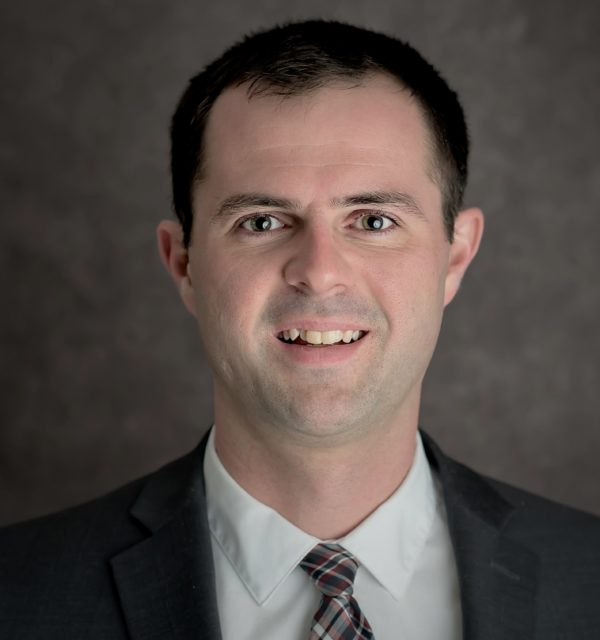
Courtesy photo
I wanted to predict what American religion would look like in 2030 by extending the electric current trend lines of the seven major religious traditions in the United States. More specifically, I was interested in how long it would take for the religiously unaffiliated, who have seen major gains over the past decade, to exist clearly the largest group in the United States. The answer that was derived from my project model is 2029.
This is the point when the model says that if the and so-chosen nones grow at the slowest rate, they will still be larger than any other group, regardless of the margin of error. At the same time, the two other large religious groups in the Us (evangelicals and Catholics) volition each brand up nigh 22% of the U.South. population. The simply religious tradition that will sustain serious losses is mainline Protestants. These are the moderate forms of American Protestantism typified past United Methodists and Episcopalians. Today, they make up about x% of Americans, but in 2030 that will be cut to just under 5%. That result is stunning considering that this group made up 30% of the population in 1976.
At the same time, it'southward noteworthy that for blackness Protestants, Jews and those of other faith traditions (Mormons, Buddhists, Muslims, Hindus) the next decade will likely be one of stability and consistency. Obviously, projecting religious demography into the future is a difficult proposition and a number of factors could make these predictions wait very silly, including national tragedies or spiritual revival. Notwithstanding, it'south undeniable that American culture and politics will slowly begin to change every bit the nones proceed to rise. Read more almost the assumptions built into this projection model and some of its results in a blog post I wrote for Religion in Public.
Burge is an assistant professor of political scientific discipline at Eastern Illinois University, where he researches the intersection between religiosity and political behavior in the U.S.
Roy Speckhardt: A future of religious neutralism
Courtesy of AHA
The number of people who are humanist is on the rising and immature people who left religion are already leaning toward not returning, which shows a trend of what is to come. But this need non be viewed by many of the faithful as something to fearfulness, for information technology will conductor in an establishment of religiously neutral secularism that will drive respect for people of all faiths and philosophies.
Unfortunately, the interim may be hard. As the Us becomes more than diverse on religious questions, religious nationalists who do not share this sentiment of mutual respect and pluralism will feel like they are losing a boxing of cultural authority. Their electric current agree of our government makes them a major obstacle to a respectful world, and they won't let go easily as our trajectory takes us further away from their unyielding and astern views. Instead, such religious supremacists will take defensive action to desperately hang onto power, non only to sustain their bigotry only endeavour to brand it the law of the land.
This means there's still plenty of work alee of us to welcome a respectful world for all — humanists and progressive religious communities will need to come together to brand this a reality.
Speckhardt is executive managing director of the American Humanist Association.
Robert P. Jones: A postal service-white Christian America hits the polls

Courtesy of PRRI
The 2010s witnessed two remarkable trends that have transformed America's religious landscape.
Beginning, the U.S. crossed a major demographic milestone, moving from being a majority white Christian nation to one without any religious and racial majority. At the commencement of the decade, 53% of Americans identified every bit white and Christian; by 2014, that proportion was 47%, and today it has reached 42%. Second, attitudes nigh LGBTQ relationships and rights have shifted dramatically. In 2010, 48% of Americans supported allowing same-sexual activity marriages, and most major religious groups were divided on the upshot. By 2019, back up for same-sex marriage amongst the general public had jumped to 66%, with solid majorities among not-Christian religious Americans such as Jews, Hindus, Buddhists and Muslims (eighty%), white mainline Protestants (74%) and Catholics (72%). Today, white evangelical Protestants are the only major religious grouping with a strong majority (71%) opposing same-sex marriage.
If the 2010s was the decade of transformation, the 2020s will be the decade of reckoning with change. Considering white Christians vote at higher rates than other Americans, the ripple furnishings of these tectonic changes in the general population haven't nonetheless reached the election box. While 2008 was the final presidential election year when white Christians were yet a majority among the general population, white Christians will likely remain the majority of voters in 2020. But in 2024, demographic waves will crash onto our political shores.
This new reality will impact partisan politics, peculiarly the calculus of future Republican presidential candidates. Currently, the GOP base of operations is about 70% white and Christian. The more than tightly President Donald Trump ties the party to this shrinking and graying base, the longer the road to victory will be in 2024 for the Republican nominee, who by necessity must create a broader, younger and more racially diverse coalition.
Jones is the CEO and founder of Public Religion Research Found and the author of "The Terminate of White Christian America." His forthcoming volume is "White Also Long: The Legacy of White Supremacy in American Christianity."
Simran Jeet Singh: Fighting confronting the new normal of religious and ethnic nationalism
Courtesy photo
The Muslim ban. The executive order designation of Jews equally a race in the United States. Bans on religious symbols in Canada and France. The Citizenship (Amendment) Act in India. Each of these represents the troubling trend of backlash against the freedom of religion in what are ostensibly democracies, driven by nationalist sentiment.
The phenomenon of religious nationalism and ethno-nationalism is not new — simply information technology has increased steadily over the past decade and has boiled over all across the earth. This is our new normal, and it has profound consequences for societies that accept drawn their force and prosperity from pluralism and variety.
The next decade will determine which of the 2 paths we decide to traverse as a global society. Do we continue downwardly the route of exclusivism, ethno-centrism and dehumanization? Or can we reverse this trend and move back toward our values of inclusivity, man rights and justice for all?
Many of us are so clear well-nigh which path we prefer that the answer seems unquestionably obvious. It feels easy to dismiss our current trend equally a misguided bibelot that is easily correctable, or an ugly backlash that will fade on its own. If we have learned annihilation from the past decade, though, it must exist that the nationalist forces are powerful and compelling enough to have taken a strong hold over our world. Information technology volition require significant intention, strategy and effort to overcome their momentum.
Singh writes the Articles of Faith column at RNS and hosts the new "Spirited" podcast. Based at New York University's Heart for Faith and Media, he is a senior religion fellow for the Sikh Coalition.
Rabbi Jeffrey Salkin: Jews set for a new and difficult year
 The Talmud says: "Ever since the destruction of the Temple, prophecy has been given into the hands of children and fools." I am neither, but permit me tell yous what I see in the stars for earth Jewry in the coming year. The picture is not pretty. This past year has seen the rapid acceleration of anti-Semitic incidents — both in Europe and in the United States. The social contract, complete with an allowed organisation that guarded confronting the excesses of hate, has vanished.
No, this is non Berlin, 1938. And yet, information technology is disturbing and disorienting. European Jews are "accepted" to this; it has been part of their narrative for the past thousand years. For American Jews, this is something for which nix in their history or experience has prepared them. More disconcerting: With the exception of certain major cities, synagogue amalgamation rates are dropping. Fewer young people are getting a quality Jewish didactics. With a shrinking sense of religious community — less communal Velcro — immature Jews, and others, volition be less prepared to meet the external challenges they will confront.
But there is hope. Synagogues might be shrinking, simply alternative kinds of communities and structures are growing. The number of Jewish startups, and the energy within them, is admirable. The Jewish arts are experiencing a new vitality. And then, in 2020: At that place volition be more hate. The ballot year will cause more of information technology to spew out of the body politic. Jews will need to figure out how to creatively face that challenge. It will not be piece of cake, but my money is on the Jews.
Salkin writes the award-winning column Martini Judaism at RNS. He also serves equally the senior rabbi of Temple Solel in Hollywood, Florida.
Luciano Joshua Gonzalez-Vega: A new era for Latinx leadership
Courtesy photo
In Hispanic, Latino, Latina and Latinx spaces, generational shifts in religious beliefs take acquired a general undercurrent of tension that is palpable and ever-present in a diverseness of households. Once uniformly Cosmic families are now theologically diverse, wherein younger members might be evangelical, Mormon or even not-Christian altogether, while many of their parents are even so comfortably Catholic. In the past 10 years, in and out of Latin America, Latin American families have witnessed significant religious upheaval, and this is a truly historic moment in terms of religious diversity throughout Key and S America and for such families outside of Latin America.
In the side by side decade, every bit religious movements and humanistic groups akin begin to respond to new social conditions and environmental needs, Hispanic, Latino, Latina and Latinx theological and humanistic spaces volition witness a new surge of activism and leadership from their Latin American members. Beyond theological lines, the next decade volition bring with it a surge of Latin American leadership, leadership that takes into account material conditions faced past people in this life, and leadership that is inspired to work to change the earth for the better.
Theologically, humanistically and socially, Latin American leadership will take on new and more than comprehensive roles in major organizations, especially in response to new challenges like the threat of climate change, and the renewed rise of authoritarianism throughout the globe.
Gonzalez-Vega is the co-chair of the Latinx Humanist Alliance, a manager of the Hispanic American Freethinkers and an administrator of the Secular Latino Alliance. He runs the Patheos blog Sin God.
Marker Silk: Religious differences as national identity
Courtesy photo
Worldwide, the most consequential religion story of the by decade was the election of the key archbishop of Buenos Aires, Jorge Mario Bergoglio, as Pope Francis in 2013. Inside the world'due south largest religious organization, Francis has dramatically restored the liberalizing spirit of the 2d Vatican Council, much to the consternation of Catholic traditionalists in the developed world. He has also get the world'south most important voice of conscience, emphasizing the plight of immigrants at a time of increased demographic dislocations and, perhaps most importantly, putting his moral dominance behind the cause of combating climate modify.
During the side by side decade, the overarching story volition be the ideological importance of religion in the domestic politics of nation-states. This includes the harsh suppression of Muslim minorities in Myanmar and Red china, the Modi government's effort to define Bharat as a Hindu state and the comprehend of Eastern Orthodoxy in Russia. In the U.S., partisan conflict over religious rights and values continues to intensify. Increasingly, differences over organized religion prevarication at the cadre of the politics of national identity.
Silk writes the Spiritual Politics column at RNS. He is a professor and the director of the Leonard E. Greenberg Heart for the Report of Religion in Public Life at Trinity College.
The Rev. Laura Everett: Collective leadership from church figures
Courtesy of Massachusetts Council of Churches
Over the past decade, the ways people connect to religious life have changed further. Among the church in New England where I serve, pastors consider "regular" Sunday attendance to be two times a calendar month. From podcasts and streaming worship to in-person attendance and membership, the practices of affiliation take shifted.
The continued exodus of many younger folks volition force farther changes. In many places, the church has been slow to answer. I'1000 intrigued by projects like the Chaplaincy Innovation Lab that seek to equip spiritual caregivers for this new religious mural, and curious almost what economic models be. At the same fourth dimension, the nature of our divisions in the church has changed. Despite all the differences in practice and polity, sometimes a conservative Methodist can identify more than with a conservative Roman Catholic than a progressive Methodist. Rather than primarily denominational differences, I'one thousand watching the division of the church interruption along the fault lines of issues of conscience and justice.
Religion volition be front and center in the 2020 ballot bicycle. For Christians, I fear that our religion volition exist further distorted and weaponized to condemn and separate. While I hear the desire in many parts of the church for a single prophetic vox to lead in the wilderness, I suspect commonage leadership will go along to guide, as we've seen previously in movements like Occupy, Black Lives Matter, #MeToo and #ChurchToo, the Climate Crunch, the Poor People'south Entrada and the humanitarian response to the cruelty of the Trump administration's Clearing and Community Enforcement detentions. I think the 2020 census holds a unique opportunity for every religious community to affirm the nobility and worth of all people.
Equally much as the church feels unsteady, I'1000 clinging to the hope of God's enduring provision, whatever may need to crumble and fall.
Everett is executive director of the Massachusetts Quango of Churches. She is a chaplain to Boston cyclists and a mender.
The Rev. Tom Reese: Pope Francis shifts church priorities
 The election of Pope Francis and his impact on the Catholic Church is the most important news story for Catholics. He has refocused its pastoral priorities away from legalism to compassion and mercy. He has focused the public priorities of the church on refugees, the poor and global warming.
In the U.Due south., the sex corruption crisis in the Cosmic Church has moved from protection of minors (which has been fairly successful) to belongings bishops answerable for covering upwardly abuse. The abuse crisis has also expanded to other faith traditions. For the country equally a whole, the major shift has been the standing growth of "nones" as a percentage of the population. Politically, the continued support of Trump by white evangelicals is critical. Internationally, the big stories have been the rising of Hindu nationalism in India, the rise and fall of ISIS, genocide against Rohingya in Myanmar and the persecution of Uighurs in Mainland china.
In the next decade, nosotros will see more believers committed to protecting the planet and slowing global warming. More than interreligious cooperation will take identify at the same fourth dimension that interreligious conflicts increment. Catholics will elect a new pope.
Reese, a Jesuit priest, is a senior analyst at RNS and writes its Signs of the Times column.
Dalia Mogahed: Faith keeps going digital
Courtesy of ISPU
Muslim immature people are equally likely every bit their elders to say religion is important, unlike their generational peers in the general public, but they are less likely to participate in communal prayer. Faith has resonance among immature Muslims but has go hyper-individualized. Instead of going to a lecture at a mosque, immature people join via Facebook Live. Instead of going to jumah prayers every Friday, people are engaging their faith through YouTube videos or lectures from their favorite speaker. This digitization to religious engagement both gives more access and risks fragmentation, polarization and the loss of shared understanding, experience and solidarity.
There is a related just distinct trend of the migrate of practicing Muslims to both the left and to the right. This shows upward as the paradigms and language of progressive social movements in the example of the left, and the alt-right in the instance of the right. They are superimposed on religious narratives, rather than starting with God's guidance to form moral positions.
Mogahed is director of enquiry at the Institute for Social Policy and Understanding, where she leads the organisation's research and thought leadership programs on American Muslims.
Charles Camosy: In defense of human nobility
Courtesy photo
In Roman Catholicism, lots of folks are going to speak about the election and pontificate of Pope Francis — and that, indeed, has been a major shift and outcome. But maybe even a bigger shift was the upshot that prompted his election: the 2013 resignation of Pope Benedict, the first fourth dimension a pope has resigned by his own determination since 1294. It was the beginning shift in a major rethinking of the papacy itself, which Pope Francis continued — albeit in a dissimilar way.
Over the next decade, I think the major theme in Catholicism — and religions that focus on man nobility — will be to try to come to the defense force of human dignity in relation to iv major threats: artificial intelligence and robotics (including sexual activity robots and robot soldiers), automated jobs (including truck driving and similar jobs), the rise of animal rights and meat alternatives, and human beings with finish-stage dementia in an era of limited health intendance resources.
Camosy writes the Imperial Catholicism column at RNS. He is an associate professor of theological and social ideals at Fordham University. His latest volume is "Resisting Throwaway Culture."
Arlene Sánchez-Walsh: Latinx Christian communities drift away toward alternative pastures
 Predictions are catchy, but luckily I don't expect that anyone other than religion nerds similar myself volition concur me to these! So with that caveat: I expect that Latinx "nones" and the drift toward the secular, unbelief, nonbelief and just plain not interested volition go along to abound. The polls vary from viii% to nearly xx% or more than, but what is articulate is that faith becomes less important as the Latinx customs comes into its first and second generation of growth in higher education and professional careers, and moves away from traditional family bonds. The drift away will continue — for Latinx Catholics and Protestants, merely what about Latinx Muslims and Jews?
Latinx religious folks who may be looking for other religious pastures will continue to look at Islam, Buddhism and an array of other religious communities to call their own. The numbers of Latinx in non-Christian traditions is pocket-sized, but in Islam, for example, Latinx are set up to move into their second generation. One of the trends to follow will be if Latinx Muslims will be willing to follow in the footsteps of their parents — or, like Latinx Christian communities, decide to drift away every bit well.
We cannot forget those communities who practice Santería, Espiritismo or varieties of religious practice that come in mixtures gleaned from the African, indigenous and Asian backgrounds that comprise Latinx people from the Americas. There take been Latinx Jews for centuries — some families just plant that out this week! There are Latinx followers of Santa Muerte, Jesús Malverde and an assortment of saints (canonized and not) for decades. My prediction for these communities? Unlike organized institutional religions, those Latinx who exercise popular faith volition keep to grow, diversify and add to the stunning diversity of our communities.
Sánchez-Walsh is a professor of religious studies at Azusa Pacific University and the writer of "Latino Pentecostal Identity: Evangelical Faith, Cocky, and Social club."
Rabbi Joshua Stanton: Rethinking Jewish identity
Courtesy CLAL
Who is a Jew? In the next decade, progressive denominations may succeed in promoting a more inclusive definition, both in the United States and Israel. In the United states, a robust new study indicates that at to the lowest degree 12% to 15% of the American Jewish population are people of color. These American Jews accept been underrepresented both in population studies and (far more importantly) in most communal institutions and places of leadership.
Major denominations and organizations are already working to ensure that all Jews feel at habitation and are treated as equal members of the Jewish people, and more will follow suit. You can expect stronger relationships, allyship and coalitions with communities of color, so that Jews of colour can proudly embrace all of their identities. American Jewish denominations would do well to mind to Jewish millennials and members of Generation Z, who are coming of age in record numbers earlier our optics. These ascent generations crave our willingness to come across each person as a unique individual, rather than as part of a broader category or binary. The jury is out every bit to whether we will larn to do and so.
In State of israel, the ultra-Orthodox Rabbinate's monopoly over union and life-bike events may end, breaking its ability to tell hundreds of thousands of people that they are non actually Jews at all. More than than two-thirds of Israelis desire this change already. Eight hundred m Israelis at present identify as Reform or Conservative Jews, and they are less and less likely to let fundamentalists who boss niche areas of government to tell them what to exercise. Ready for a improvement by progressive Jewish movements in both countries, if nosotros are able to listen to those who are chronically underserved and collaboratively create new opportunities for spiritual feel with them.
Stanton leads Eastward Stop Temple in Manhattan. He is a senior fellow at the National Jewish Eye for Learning and Leadership.
Patrick Horn: The religious left is here to stay
Courtesy of RCC
The proliferation of digital platforms has negatively impacted democratic society and representative regime through the spread of misinformation, disinformation, detest speech targeting ethnic and religious minorities, and inflammatory rhetoric that incites violence and sows discord, confusion and anarchy. Media addiction may too contribute to rising social alienation and the turn down of religious affiliation, oftentimes written every bit the obituary for mainline Protestant Christianity. Withal, 53% of the religious nones believe in a higher ability, if not the biblical God, and there is a complementary rise in "alternative spirituality" such as astrology, New Age beliefs, esotericism/occultism, and yoga or Eastern philosophies. In that location has as well been widespread popularity for the transformational leadership of Pope Francis and a growing movement of interfaith peacemaking and collaboration for the common practiced.
The religious rhetoric and woo-woo of Democratic presidential candidates testify that there is a definite "religious left" and new moral bulk that is more than concerned nearly environmental stewardship and migrants than pot smokers and gay sex activity. Their symbolic gestures and bold social calendar will strongly influence future headlines, legislation and business. "Alternative spirituality" and inclusive opportunities for social justice volition increasingly be expressed through the interfaith move and such groups equally the United Religions Initiative, which is agile in over 110 countries, has over 20 million participants and is expected to accomplish 100 million people soon. There is a coordinated endeavour amidst various religious groups to mitigate climate alter impacts, especially through partnerships such as the Interfaith Rainforest Initiative. Church building leaders and religious actors volition besides play central roles in witnessing the emergency and consoling a humanity traumatized and grief-stricken by catastrophic disasters, famine and violence due to the collapse of civilization and near-term extinction.
Horn serves on the Organized religion Communicators Council Lath of Governors.
Source: https://religionnews.com/2020/01/02/religion-2020-decade-predictions-reflections/
0 Response to "Ss Singh Practices the Lost Art of Predicting the Future"
Post a Comment